
Want a Quick Summary?
Get ChatGPT to summarize this article for you in seconds.
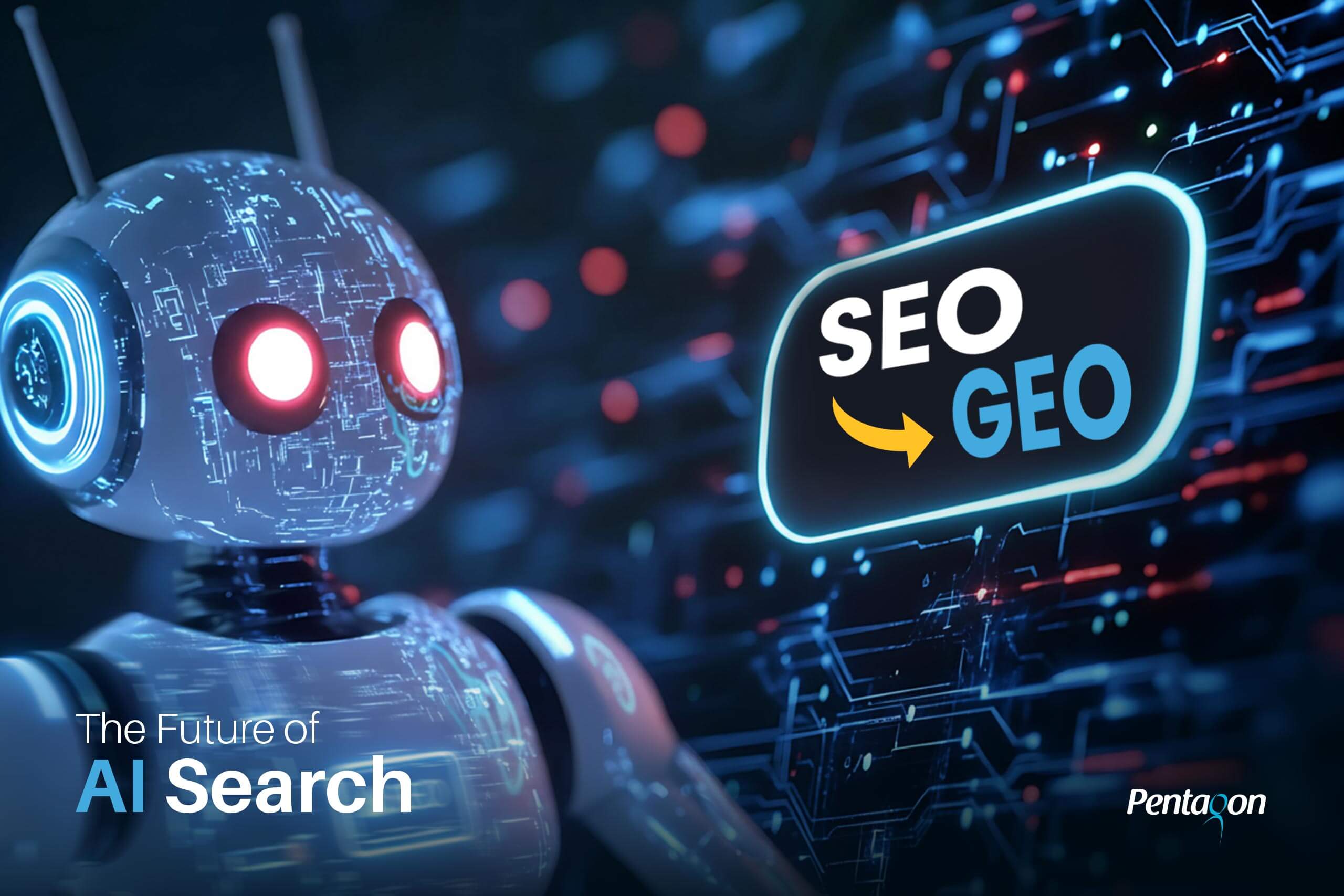
Have you ever poured hours into keyword research, optimized your meta tags, and still watched your competitors outrank you? Yes, we know that can be frustrating, but that’s because the search landscape is changing fast. Conventional SEO tactics aren’t enough anymore, and Generative Engine Optimization or GEO is proving as the next evolution of how content and search intent blend together, so brands can win visibility in a world dominated by AI-generated answers and conversational search.
So, without further ado, let’s break down what GEO is, why it matters, and how you can harness its power with the best SEO agency in Dubai to stay ahead.
You can think of GEO as the new playbook for SEO in the AI-first world. Thus, instead of optimizing strictly for keywords and backlinks (like traditional SEO), GEO focuses on how well your content aligns with AI-powered search engines and generative experiences, which are tools that craft answers, summaries, and conversational responses, based on massive language models.
In other words, when you implement GEO with the right SEO company in Dubai, GEO ensures that your content isn’t found, it’s selected, featured, and trusted by intelligent systems that users can actually rely on.
The reality is that conventional SEO was built for a world where users typed queries and received lists of links to choose from. However, that’s no longer the primary experience because today, users interact with search through conversational interfaces, like a chat-powered search result box, generative snippets, or AI assistants that serve answers directly. This invariably and implicitly means:
If your site isn’t optimized for how AI understands and grades your content, you risk being invisible, even if you rank on Page 1.
GEO v/s SEO- What’s the Difference?
| Feature | Traditional SEO | Generative Engine Optimization (GEO) |
| Focus | Keywords, backlinks, rankings | Context, intent, helpfulness |
| Target | Search engines | AI-driven answer engines |
| Results | Higher rankings | Higher utility in answers |
| Format | Static pages, keywords | Conversational, structured content |
| Goal | Traffic | Visibility in generative responses |
So, while traditional SEO in Dubai is still important, GEO is the next frontier, especially in competitive markets like Dubai, where digital visibility can make or break a business.
If you are all set to future-proof your content, these are the core elements that you need to master:
1. Context-Rich Content
AI engines crave context, not just keywords. They look at not just what you wrote, but why you wrote it. This is why you need to ask yourself:
The more comprehensive and relevant your content is, the higher the chance it gets featured in generated responses.
2. Semantic Clarity
Gone are the days when repeating your keyword on every line would help. GEO relies on semantic understanding, which means your content should use:
This isn’t keyword stuffing; it’s meaningful optimization.
3. Structured Data & Rich Markup
AI engines rely heavily on structured data to interpret and deliver content. Schema markup makes it easier for algorithms to classify:
If your site doesn’t use structured markup, the truth is you are leaving visibility on the table.
4. User-First Intent
In GEO, user experience isn’t a soft metric; it’s mission-critical. High engagement, low bounce, helpful navigation, and all these signals to AI that your content deserves preference.
We would say the future of search is no longer about ranking first; it’s rather about being understood first. Thus, if you want a robust strategy that positions your brand at the forefront of generative search, it’s time to explore GEO seriously.
Still looking for a digital marketing agency in Dubai to step into the next revolution of SEO? Use GEO in your favor with Pentagon Information Technology today!
1. Is GEO only for AI-powered search?
Nope! While it’s built for AI-driven results, GEO also improves your overall content quality, which makes it more useful for real people too.
2. How quickly can I see results with GEO?
It’s not instant. GEO builds authority over time, but once your content gains trust, the visibility tends to be more stable and long-lasting.
3. Can small businesses benefit from GEO?
Absolutely. GEO focuses on relevance and helpfulness, so even smaller brands can compete if their content truly answers user questions.
4. Does GEO mean paid ads are unnecessary?
Not at all. GEO strengthens organic visibility, while paid ads bring quick traffic, and together, they create a powerful strategy.
5. Is GEO very technical to implement?
It can be, which is why you will need a strong content strategy, structured data, and user-focused optimization because it’s more holistic than traditional SEO.



Please, share your thoughts, and let's chat over a cup of tea.